

Substack Just Changed How Notes Show Up in Feeds. Here’s What I’m Doing Differently in 2026.
I analyzed every Note in my feed for 3 months and discovered the algorithm changed. Here's exactly what's working now (and the feature everyone stopped using). How to start leveraging restacks.


Notes has been my primary growth engine for over a year now. I’ve gone from 0 to 15,000+ subscribers, with 70% of that growth coming directly from Notes.
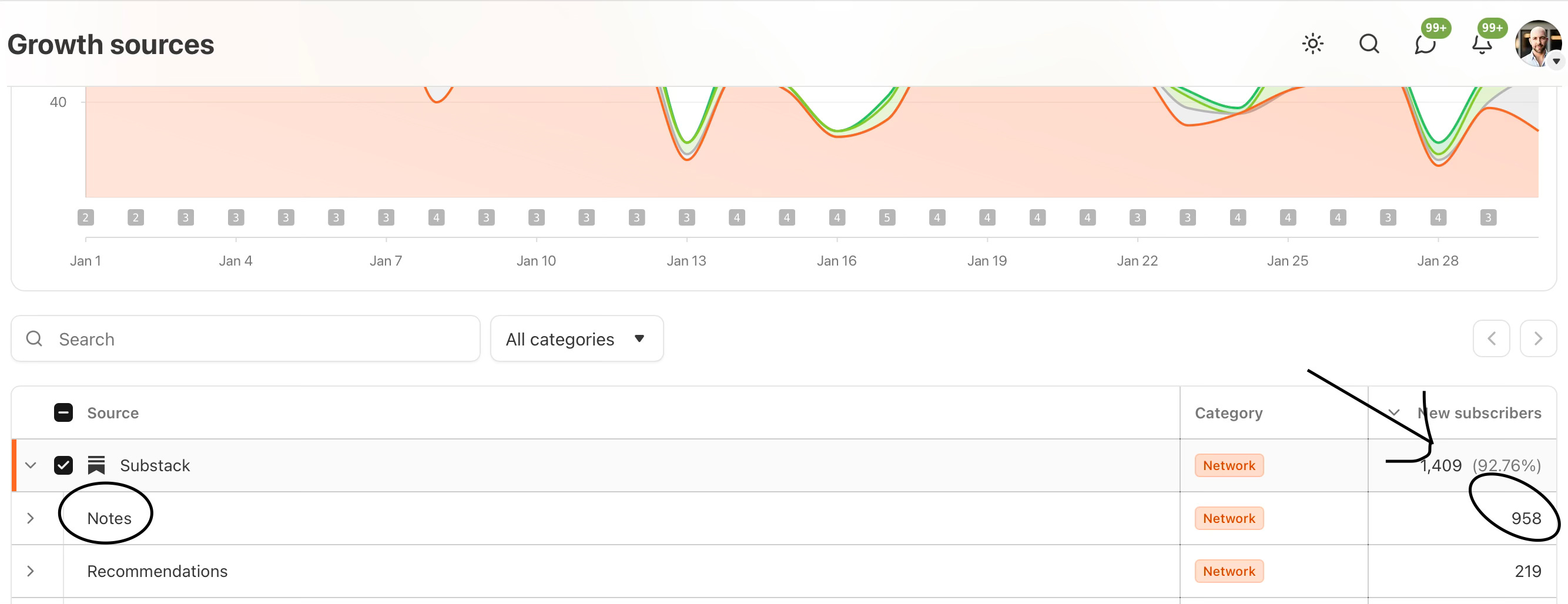
I post 2-3 Notes daily, which takes me about 20 minutes. It brings me consistent subscriber growth. The system works.
But in late 2025, I started noticing patterns. Some Notes were performing way better than expected. Others that should’ve crushed were barely getting seen.
So I did what I always do. I started tracking everything.
Which Notes showed up in my feed…When they appeared…Who was posting them…What they had in common…
I tested different approaches and watched what happened. Took notes (pun intended).
And after months of this, I finally figured out what changed.

I Spent 3 Months Analyzing Every Note in My Feed. Here’s the Pattern I Found:
The algorithm shifted sometime in the second half of 2025.
It’s not just showing your Notes to your existing followers anymore. It’s actively trying to connect you with NEW readers who have similar interests to your current audience.
The way it does this? Overlapping audiences.
When you engage with another writer’s content, especially when you restack their Note or post, Substack sees that as a signal. It tells the algorithm: “These two writers share an audience. Let’s show this person’s content to people who follow that writer too.”
I tested this theory for weeks. Restacked specific types of content from writers in my niche. Tracked what happened to my subscriber growth.
The results were undeniable.
The days I strategically restacked other writers’ content? I got more new subscribers.
Not just from engagement. From actual visibility to audiences I’d never reached before.
This isn’t about gaming the system. It’s about understanding how Substack designed Notes to work.
They want to connect readers with writers they’ll actually care about. And they’re using our behavior to figure out those connections.

The Feature Everyone Forgot About (That’s Actually Driving Everything Now)
Restacks.
When restacking first launched, everyone used it. Then it kind of faded away or just became less interesting. Writers post their own Notes but rarely restack others anymore.
I was guilty of this too.
But here’s what I discovered through testing: restacks are one of the strongest signals in the algorithm right now.
When you restack someone’s Note or post that has a similar audience to yours, the algorithm recognizes that connection. And it starts showing YOUR content to THEIR audience. And vice versa.
I ran a simple experiment.
For two weeks, I didn’t restack anything. Just posted my own Notes like usual.
Then for the next two weeks, I strategically restacked 1-2 posts daily from writers with similar audiences.
The difference was obvious.
More profile views…More new subscribers from people I’d never interacted with before…My Notes were getting in front of completely new audiences…
(This Note below shows the power of restacking:)
But there’s another piece most writers don’t realize:
When someone likes, comments, or restacks YOUR Note, it shows up in their feed. Which means their entire audience can potentially see your content.
One restack from a writer with 5,000 followers means your Note could be in front of 5,000 new people who’ve never heard of you.
That’s the multiplier effect. And we’re all just... ignoring it.
The 3 Strategic Shifts That Changed My Growth Completely
After months of testing and analyzing the feed, I changed my entire approach to Notes. Not the types I write. Those still work. But how I use the platform strategically.
Shift #1: I started restacking my own content (and it’s not as weird as it sounds)
This felt strange at first. Like I was being too self-promotional.
But here’s what I observed: posts that got restacked (by anyone) performed better than posts that didn’t. They stayed visible longer. Reached more people.
So I started testing it with my own content.
Now I restack my own posts 1-2 days after publishing them. Sometimes I’ll restack an older post that performed well months ago.
Why does this work? Most of your audience didn’t see your post the first time. The algorithm didn’t show it to everyone. Feeds move fast.
Restacking gives the content a second chance.
And the results have been clear. Posts I thought were done converting are bringing in new subscribers days or even weeks later.
Shift #2: I only restack writers who share a similar audience
Not random restacks. Strategic ones.
I only restack Notes and posts from writers who have similar audiences to mine.
Two things happen when I do this:
First, it builds real relationships. When you consistently support someone’s work, they notice. They remember you. Community forms naturally.
Second, it signals to the algorithm that our audiences overlap. So Substack starts showing my content to people who follow them. And their content to people who follow me.
I’ve had multiple new subscribers tell me they found me through another writer’s restack or because I showed up in their feed after engaging with someone they already follow.
That’s not luck. That’s understanding how the platform actually works.
Shift #3: I write Notes specifically designed to trigger engagement
This was already part of my strategy. But now I understand why engagement matters more than I thought.
Every like, comment, and restack your Note gets means it shows up in that person’s feed. Their audience sees it. Potential new subscribers discover you.
So the goal isn’t just engagement for vanity metrics. It’s creating Notes that emotionally connect with people.
Content that makes someone think “Oh, me too. I feel this way.”
There’s specific types of Notes that I write about in other posts (and in my Notes Workshop), so I won’t go into too much detail here.
The types haven’t changed. But understanding the multiplier effect of each engagement? That’s been huge for growth.
Most Writers Are Still Posting the Old Way (and missing all this growth)
I’m still gaining 10+ subscribers daily from Notes. Over 900 from Notes alone in the last 30 days.
But my Notes approach in 2026 is completely different than it was six months ago.
I’m not just posting good content and hoping the algorithm shows it to people.
I’m working with how Substack designed the platform.
Most writers are still approaching Notes the old way. Post your content. Move on. Hope for the best.
That still works. But you’re leaving so much growth on the table.
Let me show you how to strategically grow your Substack with Notes
Understanding that restacks matter is one piece.
Knowing which types of Notes actually convert browsers into subscribers? That’s another piece.
Writing Notes in a way that triggers engagement and amplifies your reach? That’s what most writers are missing.
I spent the last year testing all of this. Posting every single day. Tracking what works and what’s just vanity metrics. Figuring out the exact system that brings consistent subscriber growth.
That’s what I teach in my “10+ Subscribers a Day” Notes Growth Workshop.
Inside, you’ll learn:
The 3 types of Notes that consistently bring subscribers (not just likes and comments that go nowhere)
How to write Notes in 5 minutes or less so this doesn’t become another exhausting task
The formatting tricks that stop the scroll and make people actually read your Note
My strategic approach to restacks and building relationships that amplify your reach
How to avoid the engagement trap where you get tons of activity but zero actual growth
The system I use daily that brought me 900+ subscribers last month
Special bonus: When you join, you get my 7-Day Notes Growth Challenge. Seven complete Note templates you can use immediately to start writing better content this week.
I’ve proven it works. 15,000+ subscribers and $5K+ monthly revenue in just one year. All from Notes.
You can join the workshop below and start writing Notes that actually grow your newsletter:
Thank you, Wes, as a newbie. I study your newsletter and Notes to shape my own posting. I’ve put my toes in the water a couple of times. I like Substack but still the
need to do research. Happy to restock but I have no followers - hope that will change soo . Regards. EFJ
Sincerely, thank you.