

My Substack Engagement Increased 300% After Making These 7 Simple Changes (with Screenshots)
The simple shifts that turned my quiet newsletter into a buzzing community


Last month, my Substack growth slowed. I thought something was wrong with my newsletter.
Sure, my subscriber count was growing. The numbers looked good on paper. But when I published posts? It wasn’t an impressive response.
Here’s what happened: I got lazy.
I was focusing too much on promoting my Substack on external platforms and Notes, but I wasn’t putting in enough work on my actual posts.
It’s a little embarrassing to admit. Here I was helping others grow their newsletters but mine was growing at a snail’s pace.
So, I decided to double-down and start studying why others’ posts were going viral (and why mine weren’t).
The Simple Shifts that Transformed My Substack
Maybe you can relate?
You're doing everything "right":
Writing valuable content
Growing your list
Publishing consistently
But something feels... off.
Your posts get a few courtesy likes. Maybe one or two comments. The occasional share if you're lucky.
Meanwhile, you watch other writers in your niche publish posts that explode with engagement:
Thoughtful discussions in the comments
Dozens of restacks and shares
Real community building happening
Genuine connections forming
The worst part? Many of these writers have smaller audiences than yours.
I know exactly how this feels because I was stuck in the same place. Looking at my growing subscriber count but feeling that disconnect between "audience size" and actual engagement.
But then something changed.
After studying hundreds of high-performing posts and testing dozens of approaches, I discovered seven specific shifts that transformed my newsletter's engagement almost overnight.
After making the shifts:
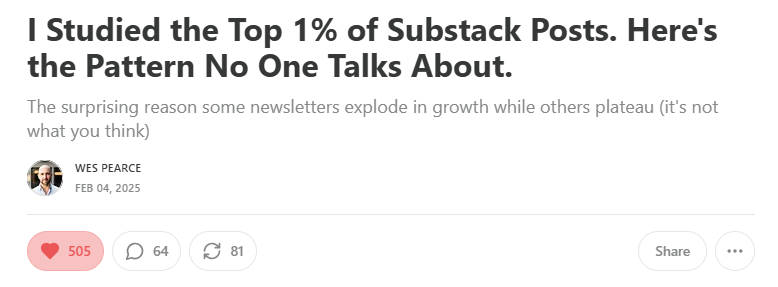
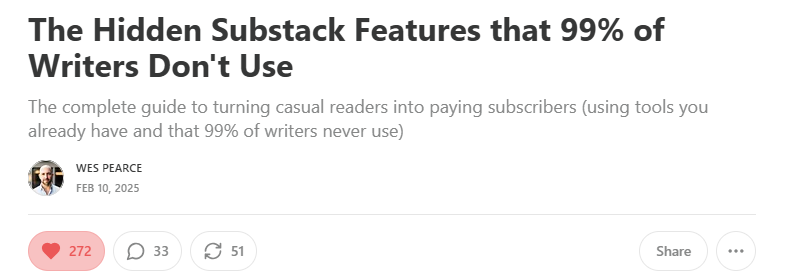
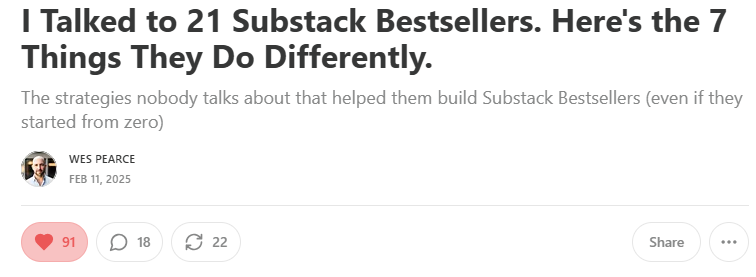
My average comments boosted by 300%
Views increased by the thousands
Restacks increased by about 3X
Even more open rate increased by ~8%
The best part? None of these changes required me to:
Dramatically change my writing style
Spend money on promotion
Work harder than I already was
Compromise my newsletter's value
I simply decided to put more effort into researching, writing, and editing my posts and the results have been impressive.
Substack Readers Are Smart
Here’s what you have to consider: Substack readers aren’t stupid. It’s quite the opposite.
You might be able to put up a minimal effort post on Instagram, Facebook, LinkedIn or even Medium and get good engagement. But not on Substack.
Substack readers will see through sloppy content in a second. So, we simply have to up our game. (which is a good thing).
Let’s dive into the changes I made…
1. The Content Strategy Shift: Moving from Random to Strategic
This one stood out to me the most.
When I started analyzing my most successful posts, I expected to find that better writing was the key. Instead, I discovered something completely different.
Most writers (including me at first) sit down on publishing day and think, "What should I write about?" They pick whatever topic comes to mind and start typing.
I was doing the exact same thing.
But what I discovered from my highest-performing posts was that strategic planning beats random inspiration every time.
Here's what changed: Instead of writing whatever came to mind, I started being intentional about my content strategy.
First, I began using AI tools like Claude to help me brainstorm different angles on topics. Not to write my posts for me, but to explore unique perspectives that could resonate with my audience.
One writer told me: "I used to just write about newsletter growth. Now I explore specific angles like 'The Hidden Pattern Behind Every Six-Figure Newsletter' or 'Why Most Growth Advice Is Actually Hurting You.'"
The numbers backed this up:
Posts with unique angles got 3x more engagement
Strategic titles drove 5x more clicks
Planned content series built consistent momentum
Engagement rates doubled on methodically crafted posts
But here's what really made the difference...
I started studying viral posts across Substack. Not just reading them but really analyzing why they worked. I noticed something interesting:
The posts that got the most engagement weren't necessarily the best written. They were the ones that:
Challenged common assumptions
Included specific metrics and proof
Told compelling stories
Offered unique frameworks
This shift in thinking changed everything about how I create content.
Instead of publishing whatever feels right, I now spend time crafting posts that are designed to resonate, engage, and grow my audience.
In addition, I’ve started planning my content a few weeks in advance. I’ll group specific topics around each other, especially if I’m building to launching a new class or product. No more random posts.
Let me show you what happened when I made the second change...
2. Adding Metrics & Proof That Command Attention
"People don't just want advice anymore. They want proof it works."
This insight came from analyzing my top-performing posts. The ones that got the most engagement weren't just well-written – they included specific numbers and concrete evidence.
I used to write posts like:
"How to grow your newsletter"
"Ways to increase engagement"
"Tips for getting more subscribers"
Generic. Forgettable. Just like everyone else.
Then I started adding specific metrics and proof:
"How I Grew From 0 to 1,000 Subscribers in 90 Days"
"The LinkedIn Strategy That Brings Me 50+ Subscribers Weekly"
"Why My $497 Offer Converts Better Than My $47 One"
The difference in engagement was immediate.
But here's what really matters: This isn't about bragging or showing off numbers. It's about giving readers concrete evidence that what you're teaching actually works.
I noticed something interesting when studying successful writers:
They don't just share strategies – they share results.
They don't just give advice – they show proof.
They don't just tell – they demonstrate.
"The moment I started including specific metrics in my posts, everything changed," one writer told me. "People could see I wasn't just theorizing – I was sharing real results."
This approach works because it:
Builds instant credibility
Makes concepts feel more achievable
Gives readers clear targets to aim for
Shows you're actually doing what you teach
(Side note: Be sure the metrics are truthful, reasonable, and not over the top. You’ll lose credibility if you inflate your numbers or make it seem outrageous.)
You don't need massive numbers to make this work. Even small wins, when specific, are more powerful than vague claims of success.
3. Transform Your Titles: Crafting Headlines That Command Attention
Your post title might be the single most important element determining its success.
I learned this the hard way.
For months, I'd spend hours crafting the perfect post, only to slap on a quick title at the end. Classic mistake. Because here's the truth: If your title doesn't grab attention, nobody will ever see that brilliant content you worked so hard to create.
So, I started experimenting with my titles.
Instead of: "How to Grow Your Newsletter like a Pro"
I wrote: "I Studied 100 Newsletter Homepages. Here's The One Pattern Nobody Talks About"
Instead of: "Tips & Tricks for Monetization a Newsletter"
I wrote: "Why $5 Subscriptions Are Killing Your Newsletter Income"
Instead of: "Building Community on Substack"
I wrote: "The Hidden Features That Drove My Engagement Up 300%"
Here's what I learned about titles that get clicked:
Numbers create credibility. Whether it's "7 strategies" or "300% growth" or "$10K monthly," specific numbers make your claims feel more concrete and achievable.
Controversy sparks curiosity. When you challenge common beliefs ("Why Everything You Know About Newsletter Growth Is Wrong"), people can't help but click to see if they're making a mistake.
Personal stories pull readers in. Starting with "I" or "How I" makes the post feel more like a story than a lecture. It also shows you've actually done what you're teaching.
Here’s what really matters: Your title isn't just about getting clicks. It's a promise to your readers. Make it compelling, but make sure your content delivers on that promise.
Start with a strong promise and then deliver on that promise with your content.
I now spend almost as much time crafting my titles as I do writing the actual posts. Because I know if I get the title wrong, nothing else matters.
4. Build Relationships with Other Substack Writers & Readers
Want to know the real secret to consistent engagement? It's not about algorithms or growth hacks.
It's about building genuine relationships with other writers & your readers.
When I first started on Substack, I treated it like every other platform. Publish, promote, repeat. I was so focused on my own content that I completely missed the community aspect.
Then I noticed something: The writers getting the most engagement weren't just better writers – they were community builders.
Here's exactly what I changed:
I started showing up for others first. Before expecting comments on my posts, I began leaving thoughtful comments on theirs. Not generic "great post!" responses, but real insights that added to the discussion.
I discovered the power of the Chat feature. Instead of just using it randomly, I began hosting weekly discussion threads and Notes boosts. Writers would share their latest posts, give feedback, and support each other's work. These sessions became a highlight of my week.
Most importantly? I stopped treating other writers as competition.
Every comment I left...
Every post I restacked...
Every writer I supported...
It all came back multiplied.
You have to be genuine. The Substack community is smart – they can spot fake engagement from a mile away.
Focus on building real connections. Support others consistently. Share their work when it resonates. Celebrate their wins.
The community you build becomes your most valuable asset. When you publish a new post, you're not just throwing it into the void – you're sharing it with a network of people who genuinely want to see you succeed.
5. Adding Strategic CTAs and Buttons Throughout Posts
Want to know what really drives engagement? It's not just about great content. It's about telling readers exactly what you want them to do next.
I used to just write posts and hope people would engage. I'd drop subtle hints or end with "let me know what you think" and wonder why nobody responded.
Then I discovered the power of strategic CTAs and Substack's button feature.
Here's exactly what changed:
I started asking specific questions and adding comment buttons right below them. Instead of "what do you think?" I'd ask "what's the biggest challenge you're facing with newsletter growth?" and give them a one-click comment button to respond.
I began using share buttons strategically. Whenever I shared frameworks or templates, I'd explicitly tell readers why they should share: "Know another writer who's struggling with monetization? Share this post with them:"
Most importantly? I stopped assuming readers would know what to do next.
Every post now has clear CTAs...
Every section has a purpose...
Every button has a specific goal...
The results were immediate. Comments increased, shares multiplied, and reader engagement skyrocketed.
But here's the key: Your CTAs need to make sense. Don't just add buttons everywhere. Think about the natural next step you want readers to take at each point in your post.
Focus on making engagement easy. Give clear directions. Add buttons strategically. Guide readers toward the actions that matter most.
Your posts become more than just content – they become conversation starters, sharing triggers, and engagement machines.
6. Quality Over Quantity: Setting Standards That Matter
I used to think more content meant more growth. Publish daily, stay visible, keep pushing out posts.
I was wrong.
The turning point came when I realized something: Substack readers are different. They're not scrolling mindlessly like on social media. They're looking for substance, quality, and real value.
Your content should be solving your readers’ problems. So, it needs to count.
Here's exactly what changed:
I started setting higher standards for my posts. Every piece needed to be something I'd be proud to put my name on. Not perfect – but purposeful. Not flawless – but focused on delivering real value.
I developed a pre-publishing checklist:
Does this post solve a specific problem?
Have I included real examples and proof?
Is every section adding genuine value?
Would I save this post if someone else wrote it?
Am I proud to put my name on this?
I began treating each post like it might be someone's first impression of my work. Because often, it is. That viral post that brings in new subscribers? That's their introduction to you. Make it count.
I also started paying attention to the small details:
Taking time to craft better examples
Including specific steps readers can follow
Adding context to make concepts clearer
Editing ruthlessly to remove fluff
Making sure every claim had backing
Most importantly? I stopped publishing just to publish.
Your post doesn’t need to be perfect (it never will be). But it does need to be your best. If you can make it better, then take the time to do it.
I learned to trust my gut. When something feels half-baked, it usually is. When you find yourself thinking "this is good enough," it probably isn't.
This isn't about perfectionism. It's about respect – for your readers' time, for your ideas, and for your own growth as a writer.
Focus on creating posts you're genuinely proud of. Take the extra time to make it valuable. Add those specific examples that bring your ideas to life. Test your concepts against reality.
Quality compounds over time. Each great post builds your reputation. Each valuable piece adds to your body of work. Each thoughtful article increases the likelihood that readers will return for more.
Your reputation on Substack is built one post at a time. Make each one matter.
Let me show you the final change that ties all of these strategies together...
7. Strategic Formatting: Making Your Ideas Impossible to Ignore
Ever wonder why some posts just feel easier to read than others?
I used to think formatting was just about making posts look pretty. Line breaks here, some bold text there. But after studying hundreds of high-performing posts, I discovered something crucial.
Formatting isn't about aesthetics. It's about making your ideas impossible to ignore.
I started treating white space as a feature. Short paragraphs. Strategic spacing. Room for ideas to breathe. When you give readers' eyes natural breaks, they're more likely to keep reading.
I began using visual hierarchy to guide attention:
Bold text for key insights
Italics for emphasis
Bullet points for quick takeaways
Subheadings that tell a story
Most importantly? I stopped writing walls of text.
Every paragraph has a purpose... Every section flows naturally... Every idea gets room to stand out...
I developed a simple formatting system:
No paragraph longer than 3-4 lines
Key points highlighted in bold
Important concepts get their own line
Complex ideas broken into bullet points
Subheadings every few paragraphs
Format for readability, not decoration. Every formatting choice should make your content easier to understand, not just prettier to look at.
Think about how readers actually consume content. They scan first. They look for points that grab their attention. They decide in seconds whether to invest time in reading deeply.
Your formatting should make these decisions easier. Guide their eyes. Show them what matters. Make your best insights impossible to miss.
The best content in the world won't matter if no one makes it past the first paragraph. Make it easy for readers to fall in love with your ideas.
Putting It All Together: Your Path to Better Substack Engagement
By now, you can see that driving engagement isn't about gimmicks or growth hacks. It's about making strategic shifts in how you approach your newsletter.
It’s about focusing on quality > quantity. Taking the time your work deserves to make it better and more relevant.
Let's recap what we covered:
Move from random to strategic content planning
Add specific metrics and proof to build credibility
Craft titles that command attention
Build genuine relationships with other writers
Use strategic CTAs and buttons
Set higher quality standards
Format for maximum impact
The beauty of these changes? You can implement them immediately. You don't need special tools, a huge audience, or years of writing experience.
Start with one change this week. Maybe it's spending more time on your titles. Or adding strategic CTAs to your posts. Or joining a Notes boost session to build relationships with other writers.
Then add another change next week. And another the week after.
Each shift builds on the ones before it. Your titles get better. Your content gets stronger. Your community grows more engaged. Eventually, these practices become second nature.
But here's what I haven't told you yet...
These changes are just the beginning. After growing my newsletter and helping hundreds of writers do the same, I've developed a complete system for turning casual readers into engaged subscribers.
That's exactly why I created the Six-Figure Substack Growth Masterclass.
Your Next Steps: Join the Substack Growth Class
If you're feeling overwhelmed by all these options, I get it. I've been there. That's exactly why I created my Six-Figure Substack Growth Masterclass where I walk you through:
Exactly how I grew from Zero to 4,600 subscribers in 6 months
How to find audience problems and create solutions to solve them
My proven templates for offering services and products
Step-by-step implementation plans
Join hundreds of other newsletter writers who are already using these strategies to build profitable newsletters. If you’re ready to finally start growing (and monetizing) your audience this year, click the button below and join us inside the masterclass:
Remember: The gap between average engagement and extraordinary engagement isn't talent. It's not luck. And it's definitely not some secret hack.
It's about making intentional choices with every post you publish.
I appreciate your insights, but I sometimes struggle with transitioning your advice to improving a fiction-related Substack. I've noticed it's far easier to build readership on non-fiction, self-help, and personal work kind of content than anything related to reading. I write on various elements of the fantasy genre. I do deep dives into its sub-genres, and the elements of fantasy in general, talk about books and share fantasy fiction in the public domain...basically an Enchanted Life is a space for fantasy enthusiasts to geek out over our shared love of fantasy.
Much of your advice does not translate well, if at all to my niche, but I do read many of your posts nonetheless.
Keep up the good work!
@Wes Pearce This is gold.